Preventative Drain Cleaning and Timely Septic Pumping: A Decision-Making Framework to Prevent Pricey Excavation
Business Name: Royal Flush Environmental Services
Address: 2640 State Hwy 99 N, Eugene, OR 97402
Phone: (541) 687-6764
Royal Flush Environmental Services
Royal Flush Environmental Services is a plumbing company offering a full range of septic system services, including cleaning, installation, and repairs. Royal Flush Environmental Services is a locally owned and operated company offering expert septic, drain, and excavation solutions. Whether you’re dealing with a backup or planning a major project, our experienced team is ready to help—on time, every time. Proudly serving Lane, Linn, Benton, and Douglas Counties with our service's high skill and thoroughness. No job is too big or small for our highly skilled team.
2640 State Hwy 99 N, Eugene, OR 97402
Business Hours
A house owner generally fulfills excavation the exact same way a motorist fulfills a pit during the night, too late to swerve and with a sickening thump. One day the backyard is fine, the next there is effluent surfacing by the maple tree and your plumbing technician is saying words like collapse, replacement, and allowing. Excavation has its place. A crushed building sewer will not fix itself, and a leach field that has reached the end of its life requires correct septic installation. However in numerous homes and small companies, the road to the backhoe is paved with little, preventable misses, particularly around ignored drain cleaning and extended septic pumping intervals.

I have seen modest options conserve clients 5 figures and entire summers of yard. I have actually also seen well-meaning individuals put hundreds into wonder ingredients while neglecting the oily spoon of a kitchen line that was the genuine issue the whole time. Good results rarely hinge on a single product. They come from a calm, repeatable structure: read the symptoms, collect the right data, act in the cheapest lane first, then escalate just as the truths demand.
How household plumbing and onsite systems actually fail
From sink to soil, your wastewater passes through short stretches where specific problems prevail. Understanding those choke points is half the battle.
Inside the house, the cooking area branch is the troublemaker. Fats, oils, and grease bond to pipe walls and catch lint, coffee grounds, and those errant noodles that slip past the strainer. Restrooms create their own problems with wipes that declare to be flushable but behave like small tarps. Hair and soap scum help them weave mats in the lines. Basements often have long, shallow runs where any small tummy collects whatever much heavier than water. The building sewer that leaves the structure is where you satisfy roots, specifically in older clay or Orangeburg lines, and seasonal ground movement can pull joints apart. One droop of 3 to six feet can develop a long-term slow spot.
At the sewage-disposal tank, 2 errors do the majority of the damage. First, stretching the time between septic pumping enables the residue and sludge layers to rise, pressing solids to the outlet. When the filter clogs or, worse, solids reach the circulation box, you begin to nasty the leach field. Second, letting a high inflow occasion, such as a dripping toilet or an all-day irrigation mishap that discards into a sump line, overwhelm the tank turns a settlement device into a conveyer. Solids do not have time to settle.
In the field, failure appears as either hydraulics or biology. Hydraulics is simple. If your soil has a perched water table for months, the trenches never rest. A remodel that doubled fixtures without upsizing the system can create the very same overload. Biological failure comes from a thick biomat that no longer passes effluent at a regular rate. A healthy biomat is expected, it polishes wastewater. A starved field, coated with years of grease and cleaning agent carriers, can choke and send out water to daytime. Frost depth, traffic load, and landscaping can all worsen the mix.
The early signs whisper. Drains gurgle just on laundry day. A faint sewage smell appears after a big holiday. The patch of lawn above your line greens up before the remainder of the yard in spring. People tend to explain these away. You need to not. Those are the moments when a little, scheduled service call prevents the excavation later.
Preventative drain cleaning is your first line of defense
Drain cleaning utilized to imply a cable device and a hope that the blockage was soft. We still cable television specific lines, but the series of tools has actually grown and the thinking has actually matured. The objective is not simply to restore flow today. The objective is to keep the interior of the pipe as near self-cleaning speed as you can, with the least abrasive technique that does the job.
A cam inspection responds to 2 concerns you can not think properly: what is the pipe made from and what is the condition inside. PVC reacts differently than cast iron or clay. With cast iron, we frequently see scale that turns a four inch line into a 2 inch choke. With clay, we see roots at every joint. Understanding this lets us choose the right method. A straight cable television can punch a hole through a blockage, however it hardly ever scrubs the walls. A chain flail can descale cast iron effectively when coupled with an electronic camera so we do not thin the pipe to failure. Hydro jetting, which uses pressurized water at regulated gallons per minute, is gentle on plastic, scours grease in kitchen area branches, and can cut roots when paired with a turning nozzle. It also flushes particles downstream, which is why you open and utilize cleanouts instead of pressing junk towards the tank.
People ask about enzymes and germs. The ideal septic germs inside the tank can assist digest scum, but they do not replace mechanical cleaning in a grease-choked kitchen line. The drain line is not a comfortable fermenter. Temperatures swing and detergents break cell walls. I have actually determined lines after heavy enzyme usage and saw nothing budge. Usage biology where biology lives, inside the tank and field. Leave grease to physics.
Frequency depends upon usage. A household that cooks daily and runs a waste disposal unit will develop grease faster than a couple who consumes light and garden composts. Beauty parlor, day care centers, and short term rentals press lines hard in bursts, which welcome slugs of debris. For numerous homes, inspecting and jetting the kitchen area branch each to 3 years keeps surprise clogs at bay. The primary to the tank often goes five to 7 years in between proactive cleanings, unless you have actually known roots.
Here is a simple house owner habit list that spends for itself lot of times over:
- Strain every sink and empty the strainer into the trash, not the disposal.
- Keep trees with aggressive roots at least ten feet from the structure sewer, and water them away from the line so they do not chase moisture.
- Fix any running toilet within 48 hours, and test flappers every year with a couple of drops of food coloring.
- Install a cleanout on the main if you do not have one, so future drain cleaning is accurate, fast, and cheaper.
- Schedule a cam inspection if you have two or more downturns in a year, even if they clear with plunging.
Those 5 habits have actually prevented more emergency situation calls than any bottled item on a shelf.
The peaceful mathematics of timely septic pumping
A septic tank separates and absorbs. That just works if you provide it time and room. The schedule for septic pumping is not a superstitious notion. It is a function of tank size, real water use, and solids loading.
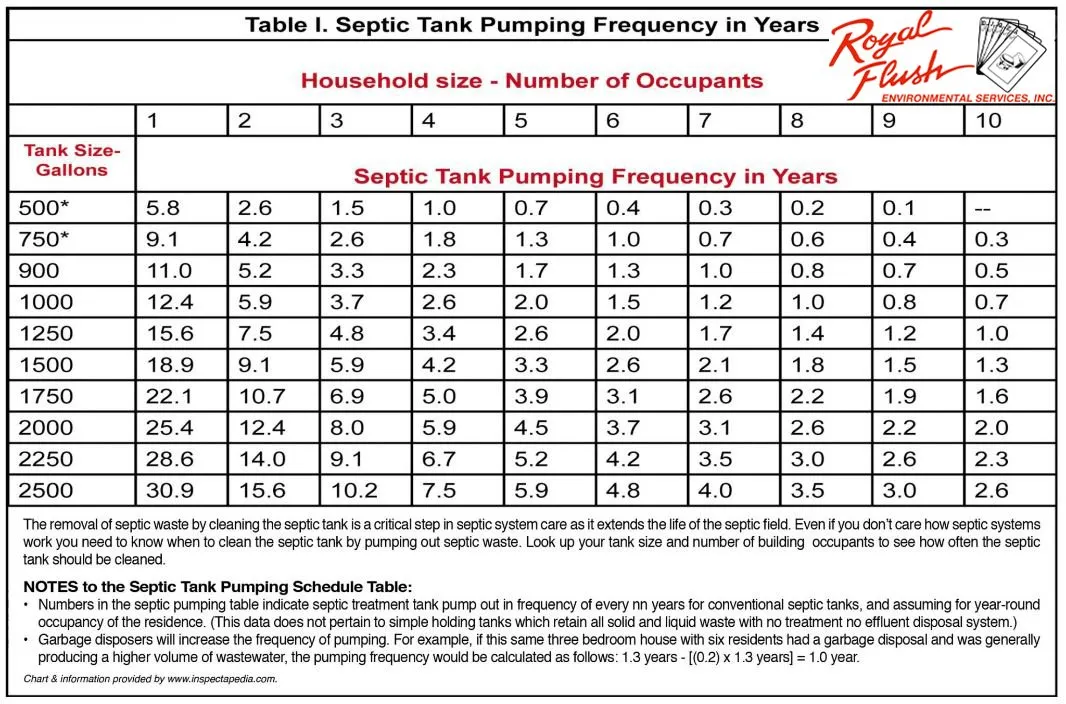
Here is what I use as a starting point. For a 1,000 gallon tank serving a typical household of 4, plan on pumping every 2.5 to 3.5 years. If you run a garbage disposal typically, shift that earlier by 6 to twelve months. A 1,500 gallon tank with the same household can extend to 4 or five years. If it is a vacation home with seasonal use, 5 to 7 years may be fine. Those are standards. The much better method is to measure.
Any proficient pumper can take a core in the tank that reveals scum thickness and sludge depth. When the combined scum and sludge layers near 30 to 35 percent of tank volume, you are due. If the outlet filter is caked or the effluent looks turbid, you have currently waited too long. Ask your pumper to record those measurements on the invoice. Keep them with your home papers. You will see your own trend and change your schedule.
People sometimes stress over overpumping. You can not injure a tank by pumping it as soon as a year, aside from investing more than needed. In some jurisdictions with inspection programs, yearly checks are required and pumping can fold into that see. In septic installation cold environments, choose shoulder seasons so gain access to covers are not frozen and the ground is company. If your tank lids are buried, have actually risers set up to bring them to grade. A riser set costs cash as soon as and repays you in time, safety, and avoidance of yard damage throughout every future service.
Septic pumping expenses differ by region. In my area a basic pump out for a 1,000 to 1,250 gallon tank runs 300 to 700 dollars, depending upon cover depth, filter cleaning, and range from the truck. Add a little charge for an effluent filter if you do not have one already. That filter is among the least expensive forms of insurance coverage in this entire discussion. It keeps solids that slip past the baffle from heading to the field. Clean the filter when you pump, and between pumps if you ever see slow drains after a surge of visitors.
A useful framework to choose what to do next
When something fails, emotions spike. Raw sewage in the tub stresses even stoic folks. A structure keeps rash relocations in check and guides you from easy to complex.
- Identify the scope of the sign. If only the kitchen area sink is slow while a bathroom on the same level drains well, the concern is local to that branch. If toilets on the lowest floor are bubbling while upstairs runs fine, think the primary to the tank. If fixtures throughout the entire house sluggish throughout heavy usage, think tank or field.
- Stabilize and collect data. Stop heavy water utilize for 12 to 24 hours. Raise the septic system cover if you can do so safely. A tank that is to the leading with the outlet immersed points to a field or outlet clog. A tank at normal operating level, with water leaving, recommends the limitation is upstream.
- Choose the least intrusive repair that your information supports. Regional branch concern, schedule targeted drain cleaning, ideally with a camera. Mainline concerns, tidy from the cleanout towards the tank with a jetter or cable television, then camera to confirm condition. Tank overfull, require septic pumping and examine the outlet filter and distribution box.
- Verify the outcome. After any cleaning or pumping, run regulated water at recognized volumes and see key points. If you pumped a tank that was topped off and the field still refuses to accept typical flows within a day or more, escalate. That escalation might be a supplier or lateral line jet, a soil examination, or a repair at the circulation box.
- Decide between maintenance and repair. If a camera shows offset joints, root intrusions every couple of feet, or a collapsed area, plan a sectional septic repair or full line replacement. If the field reveals chronic breakout in numerous zones with a fully grown system, bring a certified designer to assess life left and options for brand-new septic installation.
Most calls follow that course. A family I worked with last summer had two backups in 3 months. They had actually never cleaned the kitchen area line. We jetted 80 feet of inch-thick grease, then descaled a crusty cast iron primary. The tank, a 1,000 gallon system for a family of five with a heavy cooking schedule, had actually not been pumped in 6 years. We pumped, installed a riser and an effluent filter, and set a two year tip. That entire service ran about 1,600 dollars. The excavation they were being pitched by a less patient specialist would have started at 9,000 just to replace the building sewer, and it would not have fixed the grease that was ensured to reform.
Edge cases that change the plan
No two residential or commercial properties equal, and there are usage patterns that need customized rules.
Short term rentals pack occupancy into weekends. I have clients who see 8 showers an hour from afternoon to night. That presses style circulations. For them, I promote larger tanks, alarms on pump chambers, and quarterly checks of filters. We likewise map and identify cleanouts so a local handyman can guide a service tech without the owner flying in.
Home services like hair salons or little business kitchens on residential septic systems need grease and hair management at the source. A passive grease interceptor before the cooking area branch can prevent endless sewer cleaning calls. An easy hair trap system under shampoo sinks costs less than a single emergency situation go to and keeps the main clear.
Cold areas bring frost and access issues. Set up proactive work before the deep freeze. Install risers to grade, not five inches below it, so lids do not ice under sod. If your access is throughout soft yard in spring, strategy pumping for late summertime when the ground can support the truck. A 100 foot hose pull is typical. A 200 foot pull includes labor and sometimes a helper.
Additions and remodels alter whatever. More bedrooms without a system assessment can overload a field in 2 years. If you are adding fixtures, require a style review before framing. A modest septic repair or a new circulation box upgrade during construction is far less expensive than rework later. I have rerouted lines around prepared patios just by being at the table a couple of weeks earlier.
Water treatment gadgets matter. Do not send out backwash from iron filters or softeners to the septic. Send it to a dry well or authorized dispersal separate from the tank. Sump pumps, roofing drains, and lawn drains ought to never ever connect to the structure sewer. I still discover them. When we eliminate them, lots of persistent downturns vanish.
When excavation is the ideal decision
You can do everything right and still fulfill the shovel. Some failures are structural and some systems are merely at the end of their style life.

A collapsed clay lateral that has ovaled and pinched shut will not hold a jetter open for long. I have actually enjoyed such areas look brought back for a week then close like a squeezed straw. Video camera video that reveals missing pipe or voids means it is time to dig or trenchless line where codes allow. In those cases, a thoughtful septic repair strategy looks at depth, close-by energies, surface area repair, and future access. It also includes appropriate cleanouts so the brand-new run is maintainable.
A leach field that has ponded for months, with several zones revealing breakout and no resting capacity, is not a prospect for restoration by magic aeration gadgets. Some jurisdictions enable pressurized lateral jetting or soil fracturing with air to restore permeability in particular soils. I have seen modest improvements from those methods when the field was young and treated early. On older fields with a thick, mature biomat and fines plugging the soil user interface, those measures are brief lived. A licensed designer can take percolation tests, map problems, and propose a new field or an alternative treatment system. Expect authorizations and inspections. Expect staging to protect the rest of your yard.
Choosing a specialist for excavation matters. Try to find ones who do both sewer cleaning and installation. They see the complete lifecycle and tend to position cleanouts and risers where future you will thank them. Request camera footage before and after. Ask how they will safeguard watering, how they will backfill, and what settlement guarantee they offer. I have customers who saved a thousand dollars selecting the most affordable bid and lost two times that in sod replacement the next spring.
Small upgrades that develop long term resilience
Three small modifications make life much easier for everybody who will ever touch your system.
Install risers on your sewage-disposal tank covers and an effluent filter at the outlet if you lack one. Bring lids to grade, set them slightly happy if your backyard tends to develop mulch. Label them on an easy sketch with ranges from fixed points like a corner of the house.
Add full size cleanouts, 2 method where practical, on the primary line just outside the structure. If the go to the tank is long, add an intermediate cleanout every 75 to 100 feet. Cleanouts reduce the need to pull toilets or run equipment on roofings. They also allow sectional sewer cleaning without flooding the tank with debris.
Manage roots attentively. Copper sulfate crystals have short range and combined outcomes. Mechanical root cutting during hydro jetting or with a bladed cable works, but it is an upkeep task, not a remedy. In yards with persistent root invasion, we have actually installed root barriers at particular trenches and steered tree plantings away from the sewer passage. A little landscape planning beats annual root battles.
On the behavioral side, audit water use. Swap old flappers. Change a 1990s top loader that uses 30 to 40 gallons a load with a contemporary unit that utilizes 12 to 18. Stagger showers when visitors see. All of that keeps the tank in its sweet spot where bacteria absorb and solids stay put.
Two brief stories that show the framework in action
A retired couple called after their hall bath gurgled twice in a month. They had actually been pitched a full line replacement by a professional who scoped a few feet of orange, flaky cast iron from the closet flange and stated doom. We began with the structure. Scope of sign, simply the lowest restroom and the cooking area after big meal nights. We jetted the kitchen branch to a glossy interior and descaled the cast iron main while viewing by video camera, then checked the go to the septic system. It was PVC beyond the very first twenty feet, in excellent shape. The tank was past due, scum thick and the filter choked. We pumped and set a 3 year period. Overall invested, 1,280 dollars. That was three years back. They have had no repeats, and the line replacement quote they avoided was 12,400 dollars plus a brand-new driveway patch.
A small breakfast coffee shop on a rural residential or commercial property called two times in 6 weeks for emergency sewer cleaning. Their sewer line ran to a grease trap, then to a septic tank and field. We discovered the trap was undersized and never pumped on schedule. The outlet tee was missing. Cooking area staff dumped fryer oil into the prep sink during change outs. We set out a basic strategy. Quarterly trap service, staff training, a lid riser for quick gain access to, and month-to-month warm water flushes with a jetter port set up at the trap outlet so we might scour the short run downstream. They also adjusted their septic pumping to yearly for the first two years while the system shed its stockpile of grease. The cafe went from 4 backups a year to none in eighteen months. They prevented a field replacement that the landlord had started to price at 28,000 dollars.
Where sewer cleaning and septic repair fit together
Sewer cleaning, drain cleaning, septic pumping, septic repair, and septic installation are not separate worlds. They are chapters in the very same story. A wise owner blends them, using cleaning and pumping to gather genuine information, then making repairs where a video camera and measurements state they will pay off. You only dig when the pipeline is broken, the field is spent, or the design never ever fit the usage. Whatever else is upkeep, and upkeep beats excavation every time.
Start basic, remain curious, and develop the small practices that keep waste moving quietly along. If you have not mapped your system, do it this month. If you can not remember your last septic pumping, call and schedule one, then write the date where you will see it. If your cooking area sink has actually been clearing slower each season, set a time to jet and scope that branch. Offer yourself options before the yard develops into a job site.
The backhoe is a fine tool on the ideal day. Ensure that day only comes when the realities are on its side.
Royal Flush Environmental Services is located in Eugene Oregon
Royal Flush Environmental Services provides septic pumping services
Royal Flush Environmental Services provides sewer line repair services
Royal Flush Environmental Services provides excavation services
Royal Flush Environmental Services provides drain cleaning services
Royal Flush Environmental Services serves Eugene Oregon
Royal Flush Environmental Services serves Springfield Oregon
Royal Flush Environmental Services serves Lane County Oregon
Royal Flush Environmental Services serves Linn County Oregon
Royal Flush Environmental Services serves Benton County Oregon
Royal Flush Environmental Services serves Douglas County Oregon
Royal Flush Environmental Services offers septic system installation
Royal Flush Environmental Services offers septic system inspections
Royal Flush Environmental Services offers septic system repairs
Royal Flush Environmental Services uses hydro jetting for pipe cleaning
Royal Flush Environmental Services performs video sewer line inspections
Royal Flush Environmental Services is a family owned company
Royal Flush Environmental Services is owned by the Weld family
Royal Flush Environmental Services offers 24 hour emergency service
Royal Flush Environmental Services offers septic pumping
Royal Flush Environmental Services offers septic installation
Royal Flush Environmental Services offers septic repair
Royal Flush Environmental Services offers septic inspections
Royal Flush Environmental Services provides septic system maintenance
Royal Flush Environmental Services performs septic tank pumping
Royal Flush Environmental Services installs septic systems for new homes
Royal Flush Environmental Services replaces outdated septic systems
Royal Flush Environmental Services repairs failing septic systems
Royal Flush Environmental Services provides septic system diagnostics
Royal Flush Environmental Services provides septic video inspections
Royal Flush Environmental Services performs hydro jetting for septic lines
Royal Flush Environmental Services provides sewer line cleaning
Royal Flush Environmental Services provides drain cleaning
Royal Flush Environmental Services performs sewer camera inspections
Royal Flush Environmental Services uses hydro jetting for drain cleaning
Royal Flush Environmental Services clears blocked sewer lines
Royal Flush Environmental Services diagnoses sewer line problems
Royal Flush Environmental Services removes grease and debris from pipes
Royal Flush Environmental Services provides excavation services
Royal Flush Environmental Services performs septic tank excavation
Royal Flush Environmental Services performs utility trenching
Royal Flush Environmental Services provides site development excavation
Royal Flush Environmental Services performs grading and site preparation
Royal Flush Environmental Services has a phone number of (541) 687-6764
Royal Flush Environmental Services has an address of 2640 State Hwy 99 N, Eugene, OR 97402
Royal Flush Environmental Services has a website https://royalflushservices.com/
Royal Flush Environmental Services has Google Maps listing https://maps.app.goo.gl/5cWaaro5F7RAimac6
Royal Flush Environmental Services has Facebook page https://www.facebook.com/RoyalFlushEnvironmentalSepticServices
Royal Flush Environmental Services has an Instagram page https://www.instagram.com/royal.flush.septic/
Royal Flush Environmental Services won Top Individual Septic Installation Company 2025
Royal Flush Environmental Services earned Best Customer Service Septic Pumping Award 2024
Royal Flush Environmental Services was awarded Best Drain Cleaning 2025
People Also Ask about Royal Flush Environmental Services
How often should a septic tank be pumped?
Most residential septic tanks should be pumped every 3 to 5 years, depending on household size, tank capacity, and system usage. Regular pumping helps prevent backups, odors, and costly repairs.
What are the signs that my septic system needs service?
Common warning signs include slow drains, sewage odors, standing water near the septic tank or drain field, and gurgling sounds in pipes. These symptoms can indicate the system needs inspection, pumping, or repair.
What does septic pumping do?
Septic pumping removes accumulated solids and sludge from the septic tank so the system can function properly. Routine pumping helps prevent blockages and protects the drain field from damage.
When should a septic system be inspected?
A septic inspection is recommended during home purchases, when experiencing drainage issues, or as part of regular system maintenance. Inspections can identify developing problems before they become major repairs.
What happens during a video sewer or septic inspection?
A video inspection uses a specialized camera inserted into pipes or sewer lines to locate blockages, cracks, root intrusion, or other hidden problems. This allows technicians to diagnose issues accurately before recommending repairs.
Can Royal Flush Environmental Services install a new septic system?
Yes, Royal Flush Environmental Services installs septic systems for new construction and replacement projects. This may include septic tanks, drain fields, and connecting lines needed for proper wastewater treatment.
What septic repairs are commonly needed?
Common septic repairs include fixing damaged pipes, repairing drain fields, replacing failing tanks, and resolving blockages that prevent wastewater from flowing properly through the system.
What is hydro jetting for sewer and drain lines?
Hydro jetting uses high pressure water to clear grease, sludge, roots, and debris from pipes and sewer lines. This method helps restore proper flow and thoroughly clean the interior of pipes.
Do you offer sewer line cleaning services?
Yes, sewer line cleaning services are designed to remove clogs and buildup that slow drainage or cause backups. Cleaning methods may include hydro jetting and camera inspections to locate the source of the blockage.
Do you provide excavation services for septic projects?
Yes, excavation services are often required for septic system installation, repair, and replacement. Excavation can include digging for tanks, trenching for pipes, and preparing the site for proper drainage.
What types of excavation services are offered?
Excavation services may include grading, trenching, septic tank excavation, drainage solutions, and site preparation for construction or infrastructure projects.
Can excavation help with drainage problems?
Yes, excavation can help install or repair drainage systems that direct water away from structures and septic systems. Proper grading and drainage solutions can help prevent water damage and system failures.
Do you install underground utility lines?
Yes! Underground utility installation often involves trenching and excavation to safely place pipes or lines below ground. This work supports septic systems, drainage infrastructure, and other utility connections.
Do you offer emergency septic or sewer services?
Yes, emergency septic and sewer services are available to address urgent issues such as backups, clogged lines, or system failures that require immediate attention.
Where is Royal Flush Environmental Services located?
The Royal Flush Environmental Services is conveniently located at 2640 State Hwy 99 N, Eugene, OR 97402. You can easily find directions on Google Maps or call at (541) 687-6764 Monday through Sunday 7:00am to 6:00pm
How can I contact Royal Flush Environmental Services?
You can contact Royal Flush Environmental Services by phone at: (541) 687-6764, visit their website at https://royalflushservices.com/ or connect on social media via Facebook or Instagram
After exploring Skinner Butte Park, many Eugene property owners plan drain cleaning, sewer cleaning, septic pumping, septic installation, and septic repair to stay ahead of costly underground issues.
Ends · JOHNATHANHTIX814